
GFRC IS NOT JUST CONCRETE.
IT IS ARCHITECTURE, RE-ENGINEERED.
Thin. Lightweight. Strong. Precise. Beautiful.
Glass Fibre Reinforced Concrete has changed what architects can demand from concrete.
Complex curves.
Sharp profiles.
Sculptural façades.
Ultra-thin architectural skins.
Textures that conventional concrete struggles to reproduce.
From the Heydar Aliyev Center in Baku to One Thousand Museum in Miami, from the Shanghai Planetarium to major transportation architecture such as Fulton Center in New York, GFRC has become a material of choice for projects where conventional concrete simply cannot deliver the same combination of geometry, weight and architectural freedom.
BUT HERE’S THE PART THAT MATTERS:
Beautiful GFRC does not happen by accident.
It is engineered.
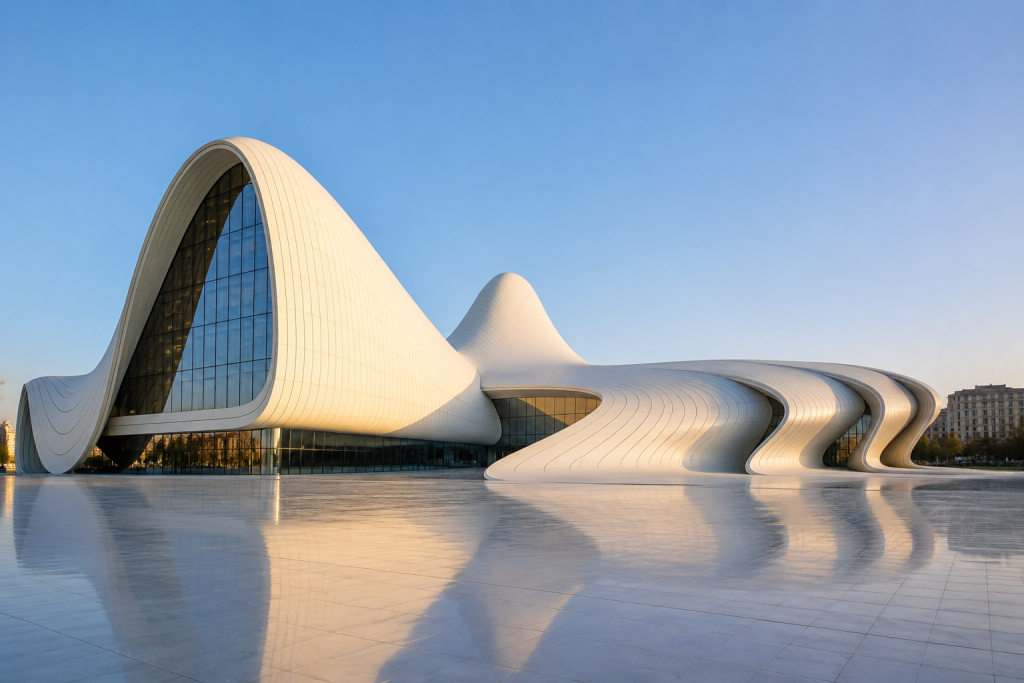
HEYDAR ALIYEV CENTER
BAKU, AZERBAIJAN
Fluid geometry.
Continuous curves.
Architecture that appears to defy conventional construction logic.
GFRC/GRC helped turn a complex architectural vision into buildable reality.
THE ARCHITECT SEES THE SURFACE.
THE ENGINEER SEES EVERYTHING BENEATH IT.
A flawless GFRC panel is the visible result of hundreds of invisible decisions.
Water-to-cement ratio.
Aggregate grading.
Polymer content.
Fibre loading.
Superplasticizer dosage.
Accelerator dosage.
Air control.
Mixing sequence.
Compaction.
Curing.
Get them right — and the panel becomes dense, strong, durable and aesthetically refined.
Get them wrong — and the panel may still look perfect when it leaves the mould- That is what makes poor GFRC dangerous.
⚠️ THE FIRST WARNING SIGN
IT LOOKS PERFECT.
UNTIL IT DOESN’T.
Imagine two identical GFRC panels.
Same mould.
Same cement.
Same sand.
Same fibre.
Same colour.
One remains dense, uniform and visually consistent.
The other slowly develops surface imperfections. Dirt finds microscopic irregularities. Moisture finds pathways. Finishing requirements increase. The pristine architectural surface begins losing the appearance that justified GFRC in the first place.
The difference?
The formulation.
A BEAUTIFUL SURFACE IS NOT COSMETICS.
IT IS EVIDENCE OF A WELL-CONTROLLED MATRIX.
THE GFRC FORMULA
EVERY COMPONENT HAS A JOB.
WATER
Too much can increase porosity and compromise the density of the matrix.
CEMENT + AGGREGATE
The foundation of the matrix. Particle packing and proportioning influence density, finish and performance.
GLASS FIBRE
The reinforcement that allows GFRC to achieve high tensile performance in thin sections.
POLYMER
Modifies the cementitious matrix, makes slimmer and tougher sections possible and contributes to the durability and toughness required from premium GFRC.
SUPERPLASTICIZER
Creates flow without making “add more water” the solution to poor workability- Most important for smooth finish and intricate designs and homogenous mix- specially at the periphery.
ACCELERATOR
Helps with early strength development, eliminate breakages, optimise cement, and where appropriate, shorten production cycles.
DEFOAMER
Controls unwanted entrapped air that can become tomorrow’s pinholes and surface defects.
THE MIX RATIO IS NOT A RECIPE.
IT IS THE PERFORMANCE.
Correct proportioning creates a chain reaction.
Lower unnecessary porosity → denser matrix → better surface → better durability → less rework → better production economics.
The right polymer helps create the required matrix characteristics.
The right superplasticizer allows workability without compromising water control.
The right accelerator helps production move.
The right defoamer helps protect the surface.
AND THE RESULT?
GFRC THAT LOOKS LIKE IT WAS DESIGNED TO LAST.
THE CHEAPER ADMIXTURE ??
SAVED ₹5.
COST ₹500.
We ha experienced – A manufacturer changes one admixture because another supplier is cheaper.
The saving looks insignificant.
The panels still come out of the mould.
So nobody worries.
Then:
Pinholes.
Inconsistent texture.
Chipped corners
Poor flow.
Fibre dispersion problems.
Additional finishing.
Rejected panels.
Production delays.
The ₹5 saving has disappeared into labour, wastage and rework.
THE MOST EXPENSIVE ADMIXTURE
IS SOMETIMES THE ONE THAT WAS “CHEAP.”
GFRC IS NOT ORDINARY CONCRETE.
SO WHY USE ORDINARY-CONCRETE ADDITIVE CHEMISTRY?
GFRC demands a different level of control.
High cement content.
Fine aggregates.
Thin sections.
Glass fibres.
Highly controlled rheology.
Architectural surfaces.
Tight dimensional tolerances.
A conventional concrete admixture may deliver acceptable slump reduction in a structural concrete application and still be poorly suited to the specific demands of GFRC.
Poorly matched admixtures can contribute to:
Excessive air
Pinholes
Poor surface reproduction
Unstable rheology
Undesired slump loss
Segregation
Difficult fibre dispersion
Inconsistent finish
Longer finishing cycles
And every defect created in the factory becomes more expensive once the panel reaches the site.
THIS IS WHERE RAZON UPLIFTS THE MIX.
FOUR CHEMISTRIES.
ONE GFRC OBJECTIVE.
01 — RAZON LTX C52 (POLYMER)
BUILD THE MATRIX. DON’T JUST FILL THE MOULD.
RAZON LTX C52 is designed for polymer modification of cementitious systems where improved matrix performance, ductility, toughness, low porosity, sharp + permanent edges and durability are required.
For GFRC, polymer chemistry becomes part of the material itself.
It helps create a more cohesive cement-polymer matrix around the reinforcement and contributes to the performance demanded from thin architectural sections.
THE OBJECTIVE:
Better matrix.
Better watertightness.
Better durability.
Better surface.
02 — VTNB SP
SUPERPLASTICIZER
DON’T ADD WATER TO FIX WORKABILITY.
CONTROL THE WATER.
VTNB SP is a high-performance superplasticizer designed to deliver improved workability and water reduction, at miniscule dosages. It ensures smallest details of the mould are filled by the concrete, ensures homogenous dispersion of the fibers and delivers top notch surface finish to the GFRC product.
In GFRC, this distinction matters. Infact its the most important.
Because when workability problems are solved simply by adding water, the manufacturer may be trading today’s easy application for tomorrow’s porosity, strengthand performance problems.
VTNB SP helps the mix be placed without making excess water the default solution.
BETTER FLOW.
CONTROLLED WATER.
BETTER-CONTROLLED GFRC.
03 — ACC-VTNB E-4
ACCELERATOR
TIME IS ALSO A RAW MATERIAL.
Every hour a mould remains occupied is an hour it cannot produce another panel.
ACC-3831 helps accelerate early strength development where accelerated production cycles are required.
That can translate into:
Earlier demoulding.
Faster handling.
Better strengths and hardness at low temperatures.
Higher production capacity.
BECAUSE PRODUCTION CAPACITY IS NOT JUST MACHINERY.
IT IS TIME.
04 — RAZON BOND 40
STRUCTURAL ADHESIVE
THE PANEL IS ONLY AS STRONG AS THE CONNECTION.
You can manufacture an exceptional GFRC panel.
You can engineer the mix.
You can perfect the surface.
You can achieve the strength.
And then compromise the entire assembly with an inadequate connection.
RAZON BOND 40 is a two-component structural adhesive paste developed for demanding bonding applications, including metal-concrete and segment bonding.
For GFRC installation and assembly applications, the adhesive joint must be treated as an engineered connection, not simply as “glue.”
TENSILE.
SHEAR.
CANTILEVER LOADS.
MOVEMENT.
ENVIRONMENTAL EXPOSURE.
The joint must be designed around the forces it will actually experience.
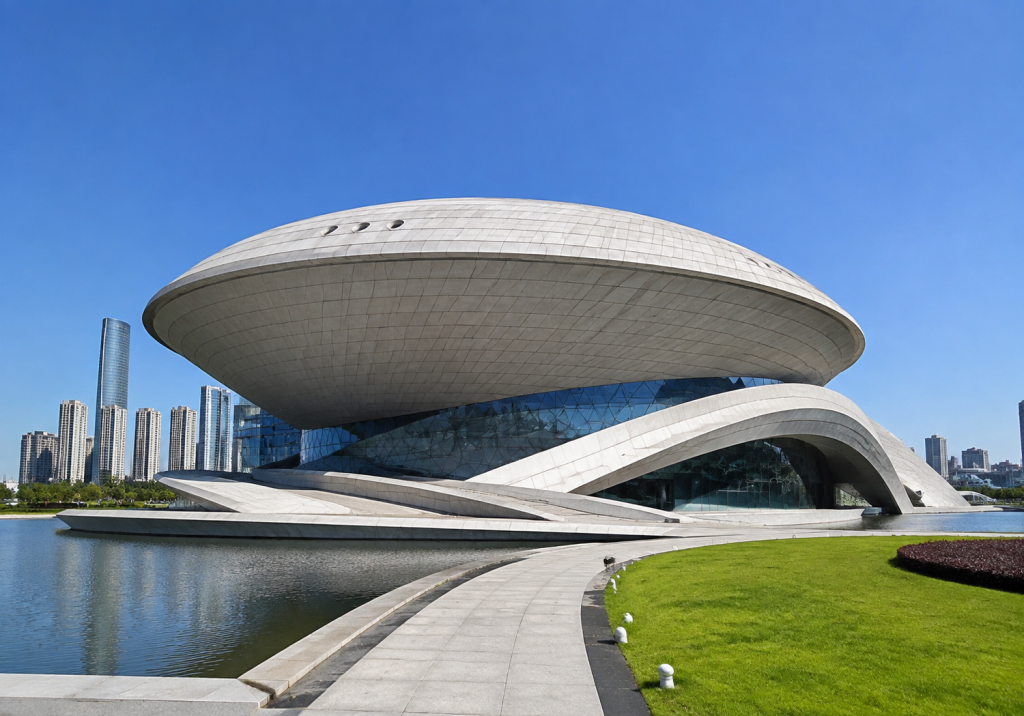
SHANGHAI PLANETARIUM
SHANGHAI, CHINA
GFRC forms part of the building’s distinctive exterior language, working alongside anodised aluminium to create a highly controlled architectural envelope.
FROM MOULD TO FAÇADE
EVERY STEP MATTERS.
01
FORMULATE
Engineer the cementitious matrix.
↓
02
CONTROL
Control water, polymer, fibre and admixture dosage.
↓
03
PRODUCE
Optimise flow, air control and early strength.
↓
04
FINISH
Achieve the architectural surface the designer specified.
↓
05
INSTALL
Create engineered, durable connections.
↓
06
PERFORM
A GFRC panel designed not merely to leave the factory —
but to perform after it leaves the factory.
THE WORLD’S ICONIC GFRC PROJECTS
PROOF OF WHAT THE MATERIAL CAN BECOME.
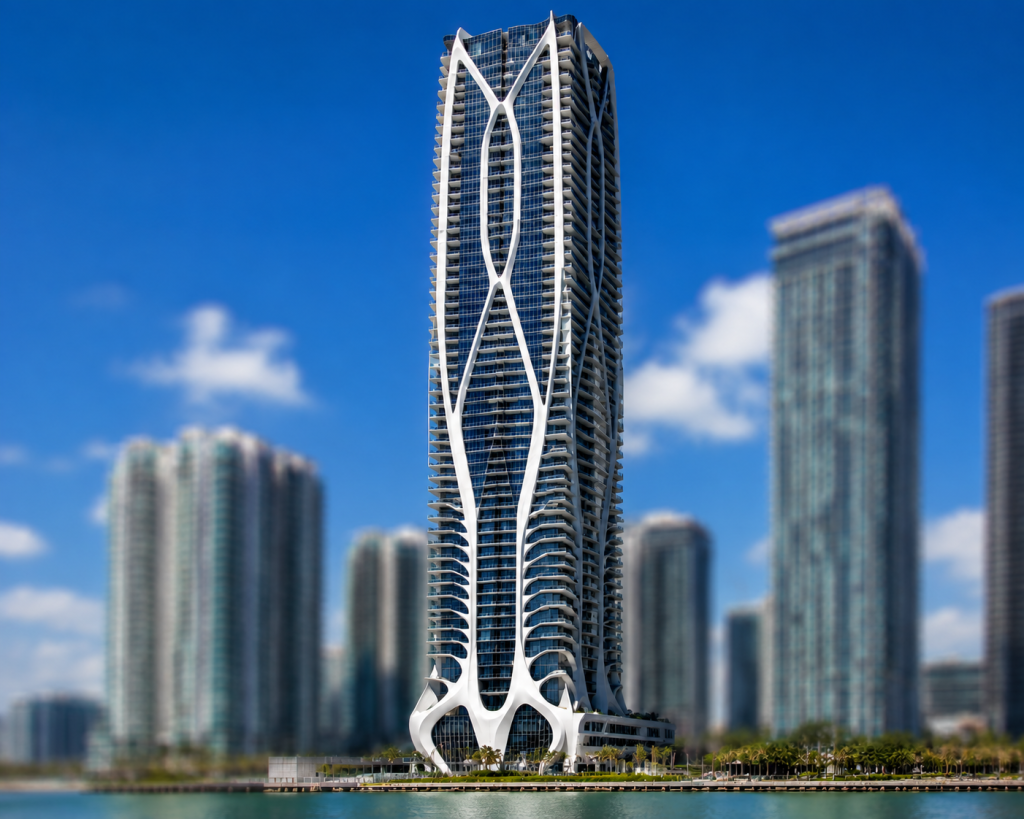
ONE THOUSAND MUSEUM
MIAMI, USA
Approximately 5,000 custom GFRC panels form the tower’s extraordinary undulating exoskeleton.
Here GFRC isn’t simply decoration.
It is part of the architectural engineering story.
THE QUESTION IS NO LONGER:
“CAN GFRC DO IT?”
THE QUESTION IS:
“HOW WELL ARE YOU MAKING IT?”
THREE THINGS KILL GFRC ECONOMICS.
01 — WASTAGE
Poor workability, surface defects and inconsistent mixes create rejected panels.
02 — REWORK
Every pinhole, edge defect and surface imperfection consumes labour.
03 — SLOW PRODUCTION
Every additional hour in the mould reduces your production capacity.
RAZON ATTACKS ALL THREE.
BETTER MIX CHEMISTRY
RAZON LTX C52
↓
BETTER WORKABILITY
VTNB SP
↓
CONTROLLED EARLY STRENGTH
ACC-VTNB E-4
↓
ENGINEERED BONDING
RAZON BOND 40
↓
HIGHER OUTPUT.
LESS WASTE.
LESS REWORK.
BETTER SURFACES.
BETTER GFRC.
DON’T CALCULATE ADMIXTURE COST.
CALCULATE PANEL & PROJECT COST.
Ask yourself:
What does one rejected panel cost?
What does one hour of lost mould capacity cost?
What does re-finishing cost?
What does material wastage cost?
What does a failed installation cost?
What does it cost when a premium façade stops looking premium?
THAT IS THE REAL COST OF CHEMISTRY.
YOUR GFRC DESERVES MORE THAN AN ADMIXTURE.
IT DESERVES A SYSTEM.
RAZON GFRC SOLUTIONS
RAZON LTX C52 + VTNB SP + ACC-3831 + RAZON BOND 40
Polymer Superplasticizer Accelerator Structural Adhesive
MAKE BETTER GFRC.
MAKE MORE OF IT.
MAKE LESS WASTE.
MAKE THE SURFACE COUNT.
MAKE THE CONNECTION STRONG.
TALK TO RAZON.
Let us look at your GFRC formulation, production process and installation requirements — and identify where chemistry can increase performance, productivity and profitability.
REQUEST A GFRC CONSULTATION-
[SPEAK TO A RAZON TECHNICAL EXPERT]
Free technical helpRAZON
CHEMISTRY THAT MAKES MATERIALS PERFORM.